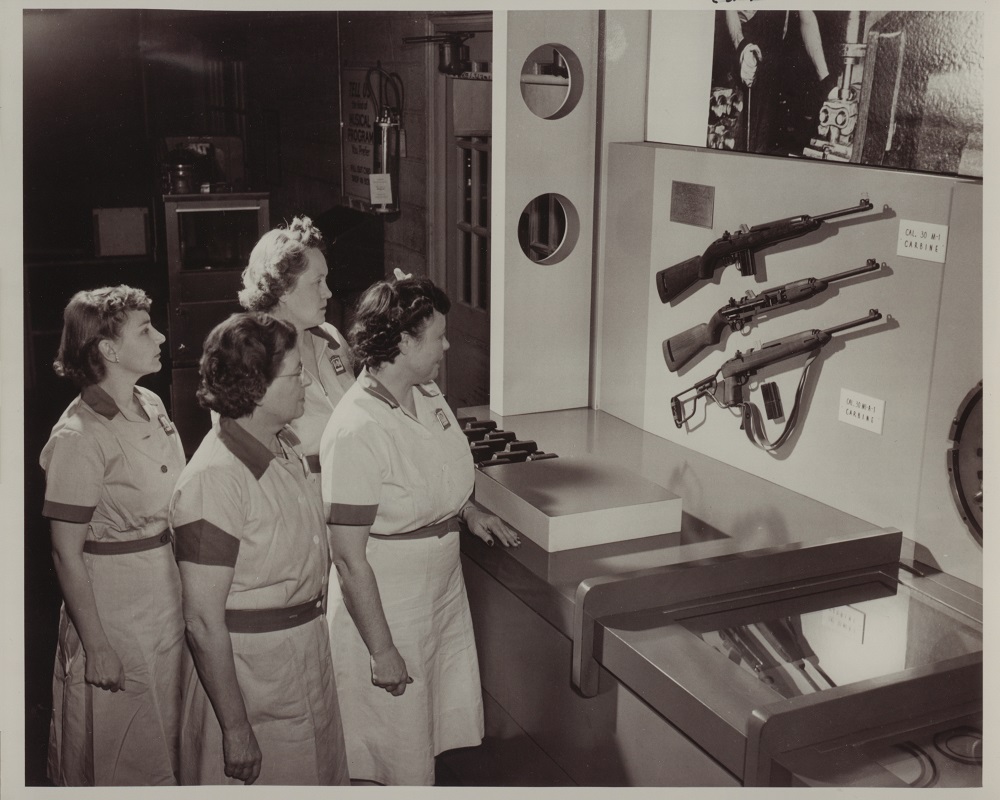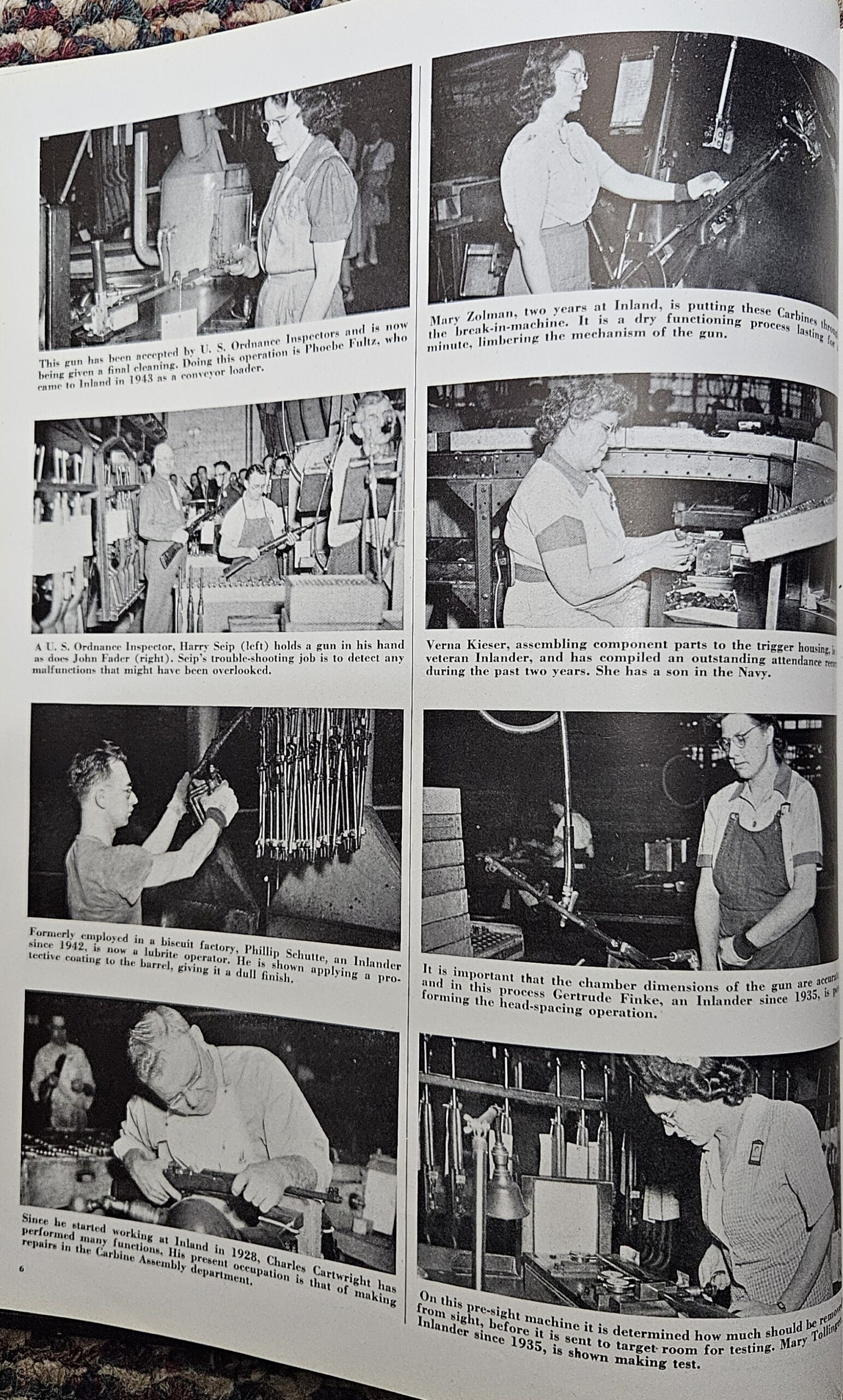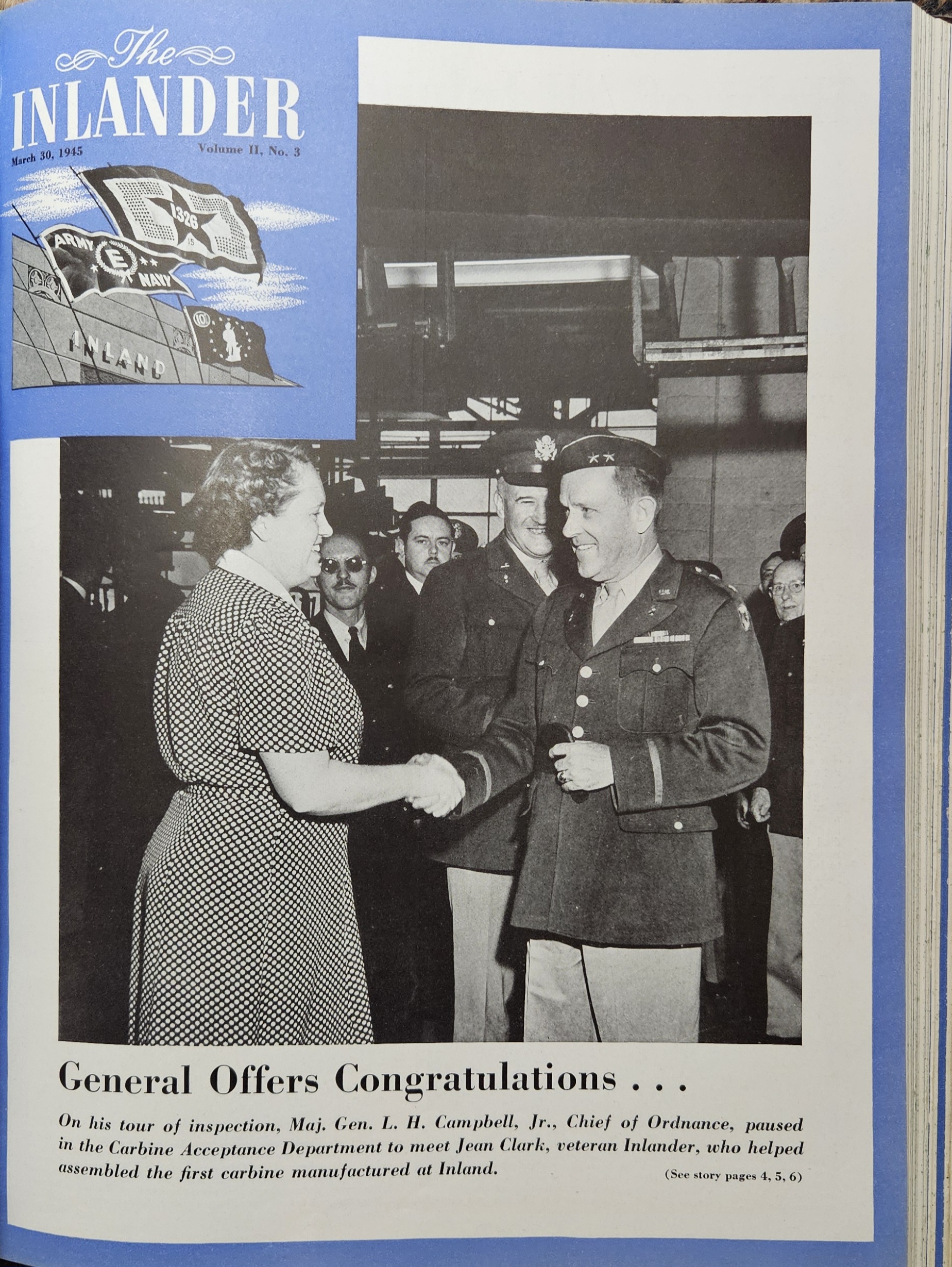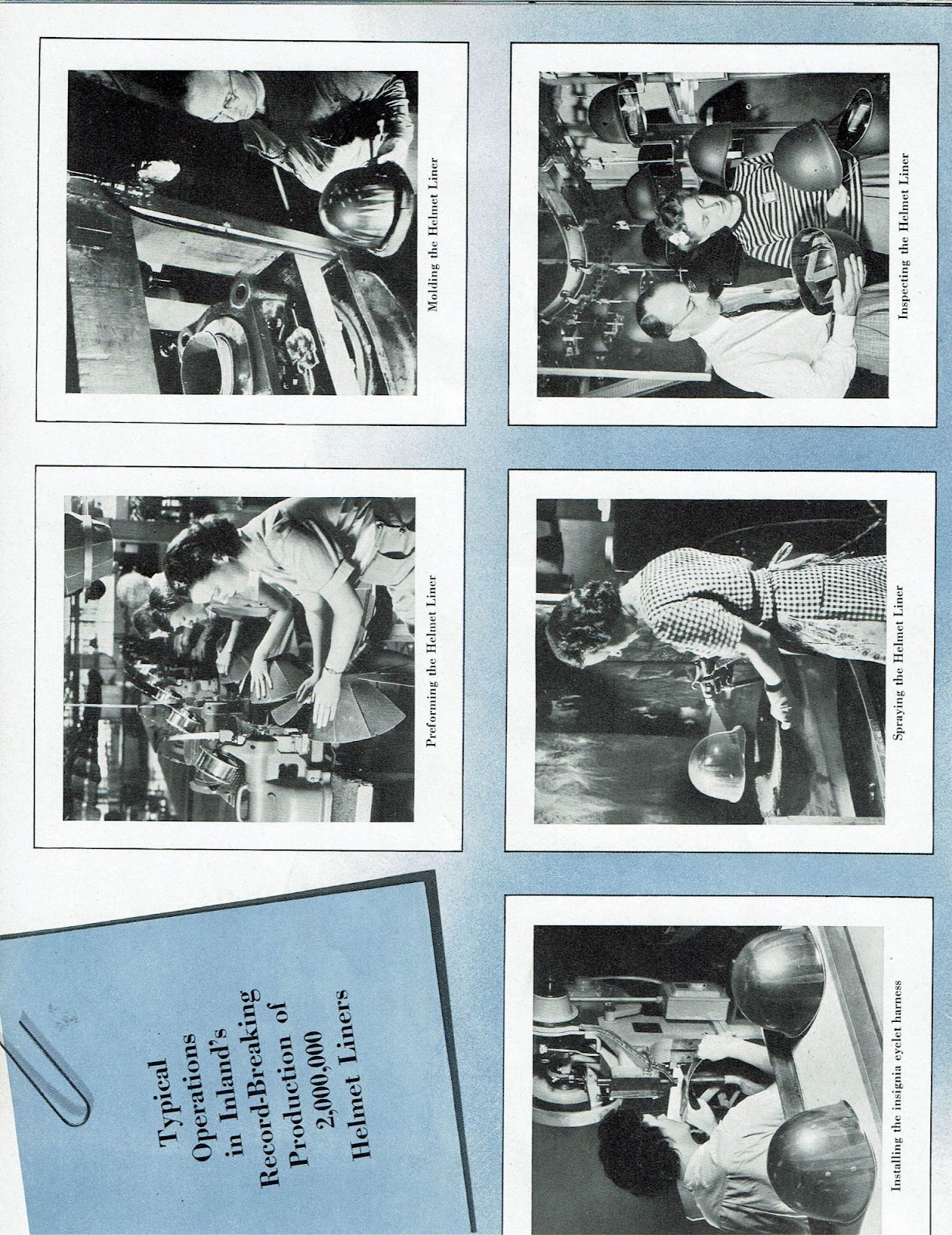

Women at Inland during WWII
When the men shipped overseas by the millions to serve
in the war this left gaping holes in the industrial labor
force. Inland was a major producer of war materials
during WWII and women were heavily recruited to work
there.
The United States government had placed a large
emphasis on campaigns geared toward women and
developed entire departments devoted to the effort that
were led by the War Advertising Council and the Office of
War Information. Propaganda leaflets and posters urged
women to participate in the war effort. The posters utilized
images and messages which were meant to be inspiring.
This is how Rosie the Riveter, who was a fictional
character, became a well-known icon of courage, strength
and determination for women’s involvement in WWII.
That’s when the women stepped in and entered the
workforce in unprecedented numbers. Women were
motivated by patriotism, the desire to serve and the
opportunity for new experiences.
In Dayton, Ohio employment information came from the
Dayton War Manpower Committee that was working in
conjunction with the United States Employment Service.
Housewives and single girls fresh out of high school were
sent into newly created training courses to learn the basics
of welding, riveting and other vital manufacturing jobs such
as operating machinery. Crucial assembling munitions
meant ladies shifting from clerical to heavy industry.
Women that were previously limited to offices moved into
skilled industrial jobs.
Through this opportunity, many women came to enjoy the
independence and economic freedom provided by these
jobs. The wartime shift into the workplace offered women
the opportunity to prove their capabilities. With the labor
force’s high war time demands women began working in
fields previously closed off to them. They took on the vital
roles in industries to produce essential wartime materials.
They replaced the men to keep production strong and
were essential to the home front’s success.
New programs were set up to help with the shortage of
men and women to fill jobs.
- It led to setting up a “buddy shift”. The first business
in Dayton to adopt the new “buddy shift” was Inland
Manufacturing in February 1943. They hired a
number of high school boys to work at Inland after
school until 7pm, at which time men and women who
had full time jobs during the day could take over and
work until 10pm
- With the increased employment of women during
WWII, the need to meet working mothers caring
responsibilities had to be addressed. In 1943
Congress enacted the first and only universal
childcare program under the Lanham Act (1940) to
support women in the workforce. State funding was
used to establish “war nurseries” child care as a
temporary measure during the war. This program
offered meals, activities and a safe place to socialize
with other children. This was established to prevent
absenteeism and assistance during the hours of their
work schedule keeping women away from their home.
- However, the call for women was only intended to apply
during the war. Once peacetime had arrived, at the end of
WWII, the same government that called women to
factories now asked if they could leave their industrial jobs
to make way for returning veterans.
By this time, women had proven that they were capable to
take on new tasks, perform essential roles and proved to
be invaluable in the fight for victory!
During World War II, Dayton was designated as a No. 1 critical labor area by the U.S. War Manpower Commission, driven by intense production demands at Wright-Patterson Air Force Base and local industries. In 1942, the city created the Dayton War Manpower Committee to address a shortage of 50,000 workers needed for war production.
Applicants for work through the Dayton War Manpower Committee were given a list of companies to apply to based on their individual qualifications and company needs. The choice about which employer to choose was often made based on available transportation as fewer women drove and there were restrictions on fuel and tires throughout the war.
Inland also searched for workers via radio and newspaper advertisements offering “top wages for skilled and unskilled jobs” and the opportunity to make weapons “to wipe the enemy off the face of the earth”.
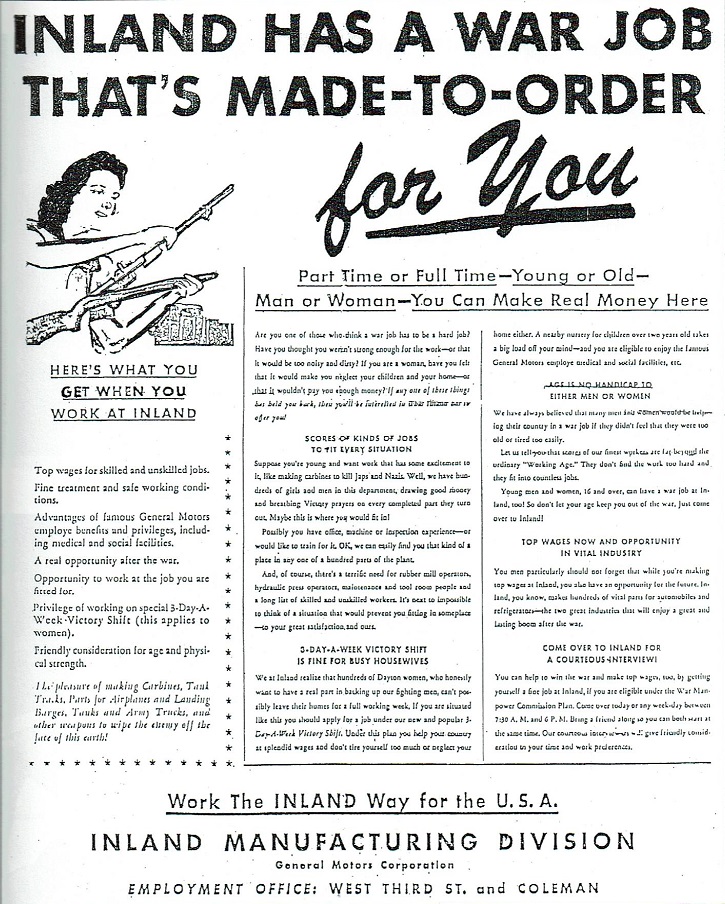
Newspaper advertisement. Source: War Baby III by Larry L. Ruth
Inland offered a Three-day-a-week “Victory Shift” for busy housewives and a nearby nursery for children over 2 years of age, as well as the famous General Motors medical and social facilities.
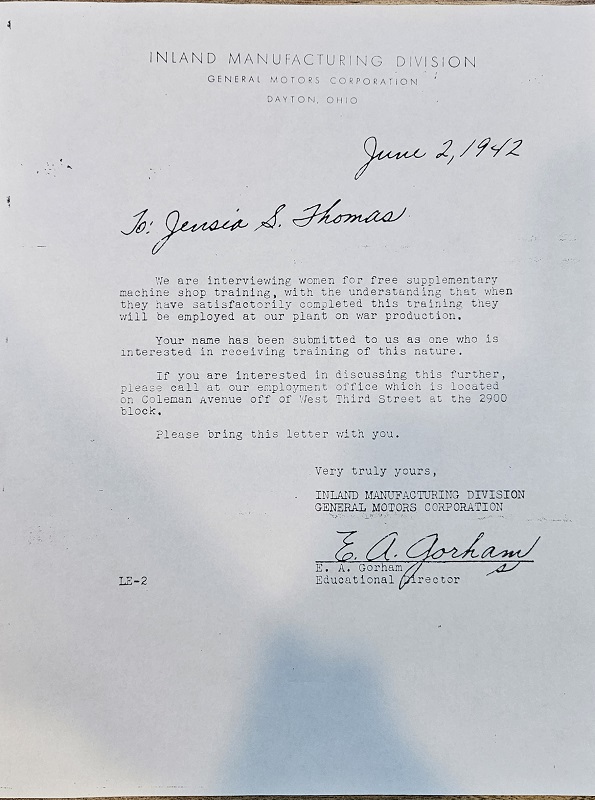
Applicant correspondence:
Source: Ron Dalhamer collection
Note 1: Add Male/female Carbine process statistics here from P. 951/952 of War Baby 3 book. Numbers reflect personnel in September 1943 only.
Carbine filing dept 100F, 14M
Receiver dept 307F, 112M
Trigger dept 172F,47M
Assy dept 244F, 77M
Acceptance Dept 12F, 118M
Shipping dept 65F, 18M
Engineering dept 29F,60M
Gas Cyl/Firing pin dept 105F,35M
Barrel dept 396F, 174M